

Curb Types – All You Need To Know
Here’s a fun fact: curbs weren’t common until the 18th century. Before that, streets were separated from pedestrian walkways using wooden posts called bollards. Things changed in 1700s London when a series of Paving Acts brought curbs into regular use across the city – and eventually, the world.
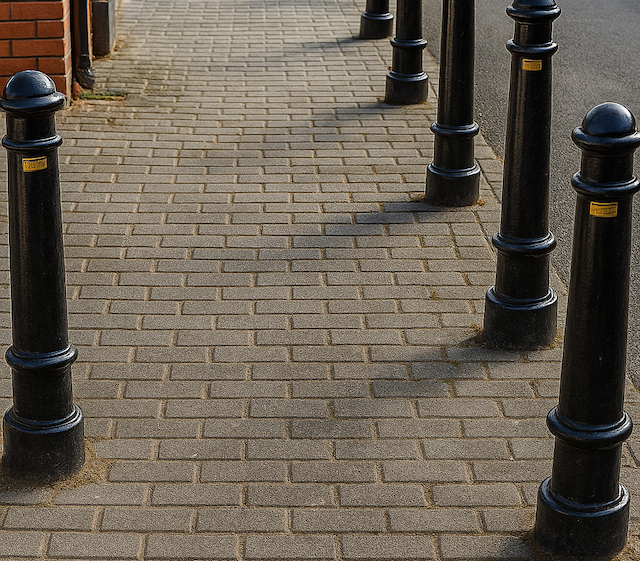
By the time of the Industrial Revolution in the U.S., curbs had become a standard feature of urban planning. Fast forward a few hundred years, and we now have several different curb types – each with its own form, function, and aesthetic appeal. Let’s break down the most common curb styles and how they’re used.
1. Barrier Curbs (Straight Curbs)
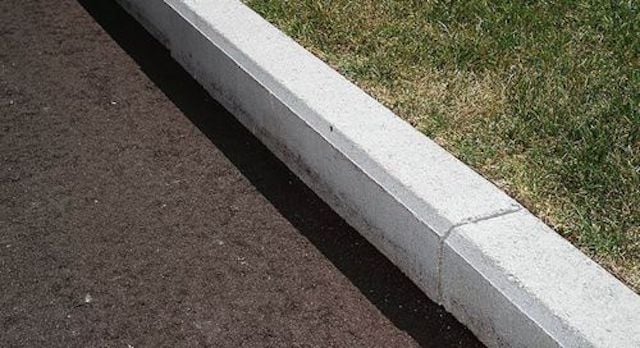
Also known as straight curbs, these are the most common curb types found in neighborhoods, streets, and public areas. Their job is simple: Keep vehicles where they belong and water flowing in the right direction. Features and functions include:
- Raised design forms a clear barrier between the road and sidewalks, lawns, or parks
- Helps block water from running onto pedestrian areas
- Often includes curb cuts for driveways and crosswalks
Barrier curbs also have several design variations, commonly:
- Flat, 90-degree edges
- Rounded corners with straight sides
- Fully rounded profiles
Barrier curbs are the most common curb design around – they’re everywhere, quietly doing their job. They’re usually designed with recessed sections at driveways or intersections to let vehicles pass smoothly into a driveway, or to help pedestrians, cyclists, and wheelchair users cross safely.
2. Rolled Curbs
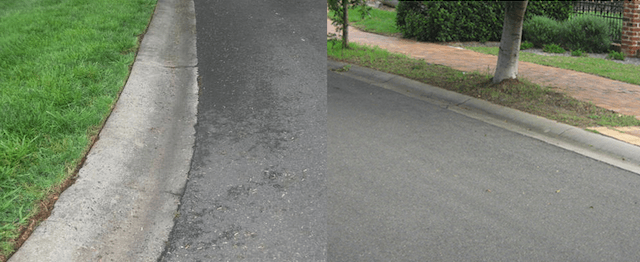
You’ve probably driven over rolled curbs for years. Rolled curbs are a subtype of barrier curbs, but with a more forgiving slope. They’re often found in residential developments because they save developers money by avoiding the need for custom curb cuts. They feature:
- Smoother, rounded design makes them easier to drive over.
- Enough height and depth to sufficiently channel water – and also enough to damage cars without the right protection.
- Similar barrier function as sraight curbs, while offering a semi-accessible design.
Althought rolled curbs may look harmless, your suspension will suffer. Damage risks include:
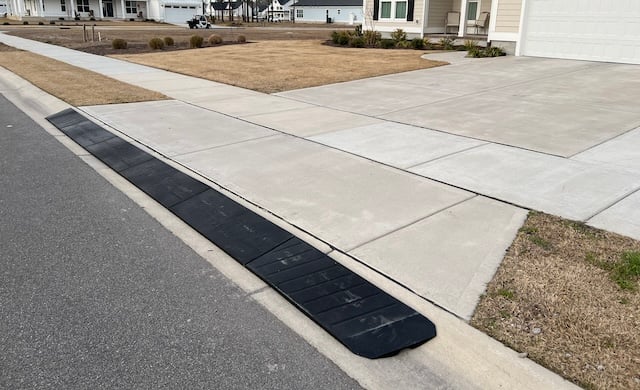
If you have a rolled curb driveway, a quality curb ramp like the BRIDJIT Curb Ramp is worth the investment. It compresses imperceptibly, is made from recycled rubber, and tends not to move once installed. Plus, it’s heavy and durable, which makes it difficult to steal – especially since the ramp is made of multiple connected sections. You can move it out of the way, but it’s a 2-person job.
3. Mower Curbs
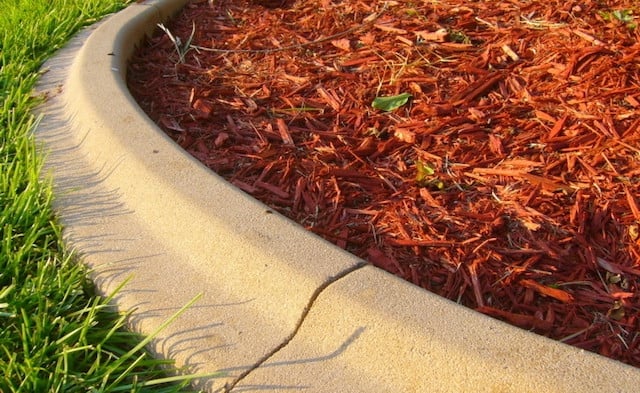
Mower curbs are more at home in parks and backyards than on busy streets. These decorative curbs help separate flower beds, garden areas, or mulch borders from grassy lawns. They feature:
- A half-flat side for the mowers to ride on without damage
- A raised opposite side to contain landscape materials
This design helps create clean lines and reduces trimming time. It also helps prevent damage to curb edges and equipment. They’re perfect for homeowners who care about both form and function.
4. Monolithic (Integral) Curbs
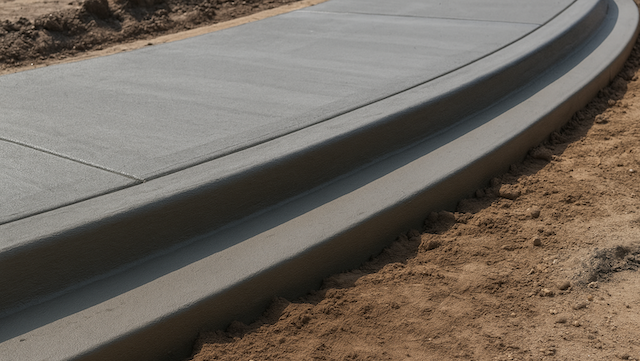
If you want a clean, seamless look, monolithic curbs (also called integral curbs) are the way to go. These are poured as one continuous piece with the street or sidewalk, making them highly durable and low maintenance. Benefits of monolithic curbs include:
- No joint means less water intrusion
- Stronger and longer lasting than traditional barrier curbs
- Creates a smooth transition for vehicles
- Withstands wear from large delivery or commercial vehicles
You’ll often see monolithic curbs in commercial zones or upscale neighborhoods where durability and appearance both matter.
5. Sloped Curbs
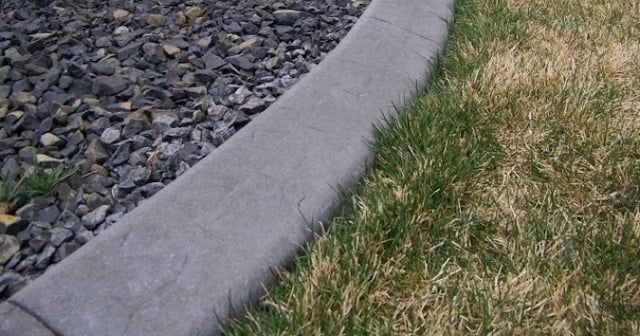
Sloped curbs (also known as slanted curbs) are mostly about style. They’re used to give driveways, parking lots, or landscape edges a softer, more polished appearance. They feature:
- Shallow angles, often sloping toward lawns or planting beds
- Typically don’t serve a barrier function
- Ideal for aesthetic curb design
These are more about curb appeal (excuse the pun) than practical use, but they still help subtly define spaces and add a creative touch.
Choosing The Right Curb Solution
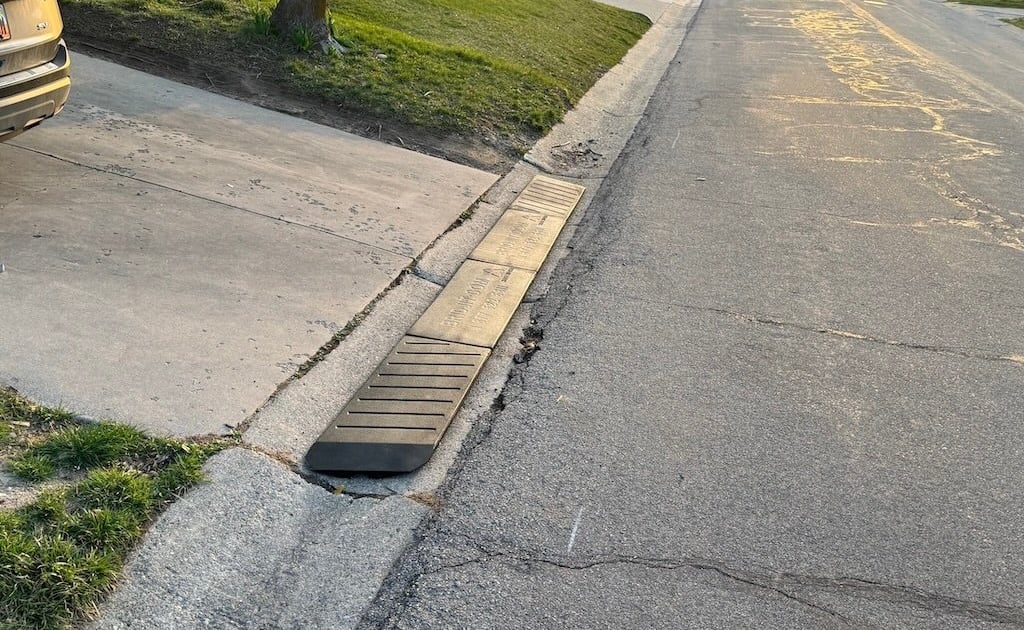
If you have a rolled curb at the end of your driveway – and many of us do nowadays – you know the jarring that comes from crossing over it. After years of this, your car will pay the price. The BRIDJIT Curb Ramp System is engineered to solve that exact problem. BRIDJIT curb ramp benefits include:
- Reduces Curb Impact By Up To 80%, Preventing Excess Vehicle Wear and Tear
- No Jolt – Smooth Entry and Exit Over Rolled Curbs
- Use In Any Weather – Built-In Water Channel Allows Drainage
- 3-Piece Curb Ramp Set Covers Almost 12ft of Rolled Curb Driveway
- Made In The USA
- Modular, With Extra Sections and Portable Options
There’s a lot more to curbs than meets the eye. From straight and rolled to decorative mower and sloped designs, each curb type serves a unique purpose.
When dealing with a challenging curb – especially a rolled curb driveway – adding a BRIDJIT curb ramp is one of the smartest and most effective upgrades you can make. Contact us with questions, and order yours today!