


Protecting Heavy Travel Trailers and Fifth-Wheels From Driveway Curb Bounce
Every RV owner knows the difficulty of navigating dips – you’re likely to scrape, and will definitely have to deal with a hard jolt that rattles the truck cab, flexes the frame, and sends dishes flying out of cabinets. It’s a common occurrence that happens when your heavy travel trailer or fifth-wheel steps off a steep rolled curb gutter and onto the street – and it damages your rig and tow vehicle over time.
Heavy travel trailers place extreme weight and sudden loads on your truck when crossing rolled curbs. Bridging that uneven gap with a heavy-duty rubber driveway ramp is the best way to stop hard impacts, protect your hitch, and make coming home stress-free.
How Rolled Curb Bounce Damages Tow Rigs
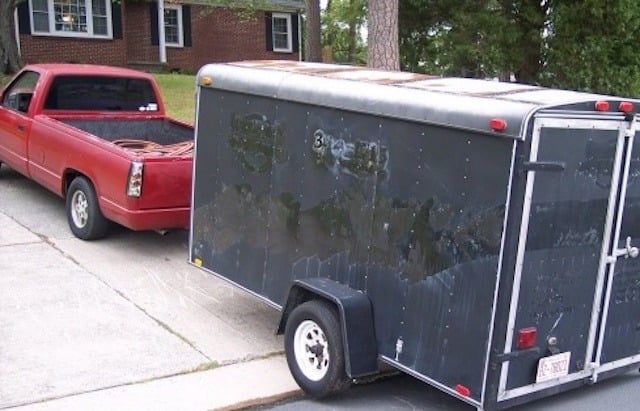
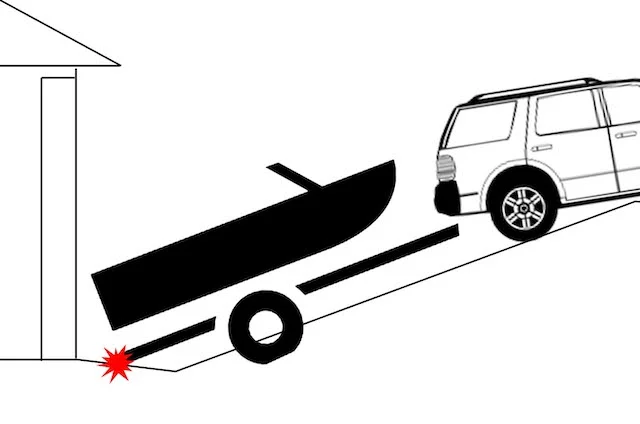
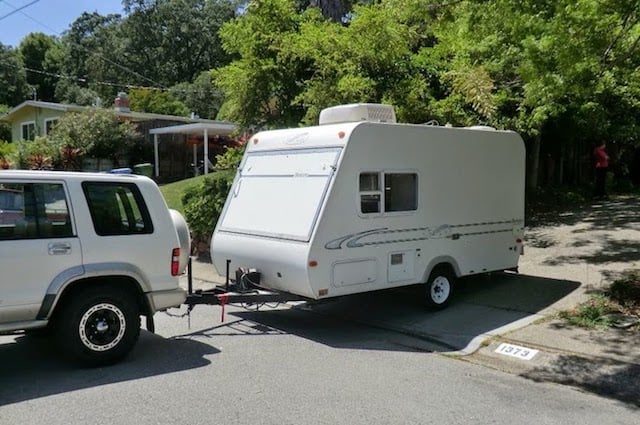
Rolled curbs help guide street drainage, but for heavy tow rigs, they act like reverse speed bumps. Understanding how these concrete dips affect your setup shows why curb bounce causes serious damage over time.
Tongue Weight and Pin Box Strain
When your truck’s rear wheels drop into a curb channel, the truck bed drops fast while the heavy trailer stays high. This sudden motion transfers hundreds of pounds of force straight onto your hitch receiver, weight-distribution system, or pin box. Over time, this severe lever effect strains your hitch assembly and frame far more than normal highway driving.
Rear Overhang and Hitch Dragging
Long travel trailers have large rear overhangs behind the axles. When trailer wheels dip into a curb depression, the rear bumper drops close to the street surface. Low components like leveling jacks, stabilizer pads, drain valves, and skid bars can slam right into the concrete, causing costly damage.
Axle and Frame Stress
Tandem and triple-axle trailers do not roll over curbs smoothly. Each axle hits the curb dip on its own. As the front axle climbs up, the rear axle absorbs most of the trailer’s total weight. This bottoms out suspension springs, strains axle bolts, and sends shockwaves through the trailer frame and cabinets.
Why Standard Driveway Fixes Fail Heavy Trailers

Image Credit: RV.net
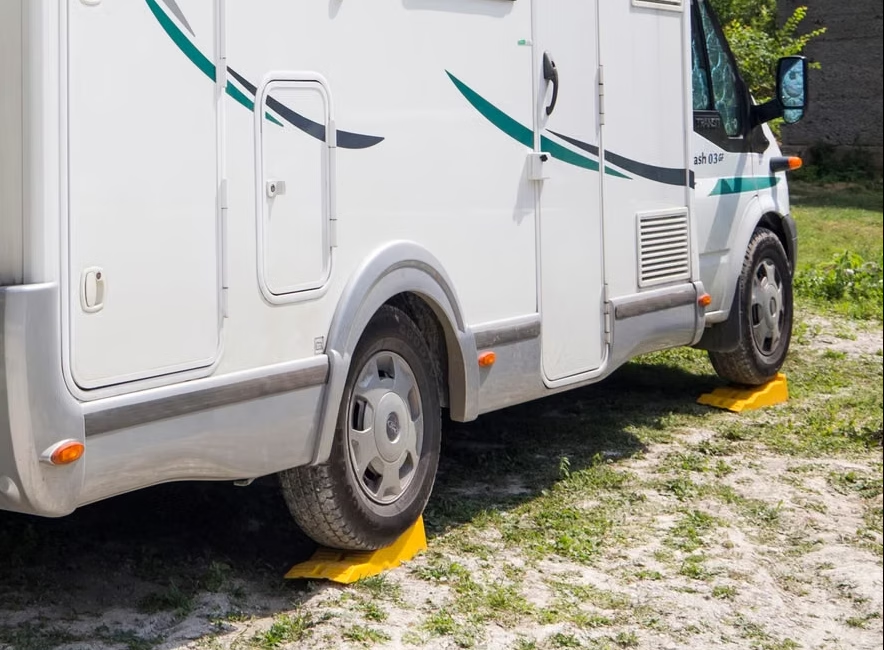
Frustrated RV owners often turn to quick DIY fixes to smooth out their driveway entry. However, typical DIY methods break down quickly under the weight of heavy travel trailers.
- DIY Wood or Concrete Patches: Wooden boards crack and rot under heavy axle loads, shifting around when you back up. Pouring concrete directly into street gutters is hard work, creates a ramp that will crack easily under heavy weight, and often violates city drainage codes.
- Cheap Plastic Ramps: Lightweight plastic ramps cannot handle heavy tow rigs. When a 10,000+ lb travel trailer turns or backs over plastic, the material bends, slides, or crushes under the weight.
- Permanent Curb Modifications: Cutting down a city curb requires municipal permits, costs thousands of dollars, and almost always breaks local drainage laws.
How BRIDJIT Curb Ramps Solve the Trailer Bounce Problem
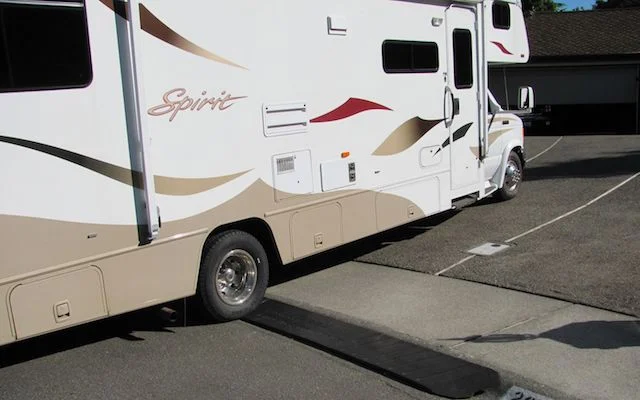

Image Credit: DoItYourselfRV.com
Designed specifically to bridge steep curb gaps, BRIDJIT Curb Ramps offer a durable, eco-friendly entry between your driveway and the street.
Heavy-Duty Weight Capacity
Made in the USA from recycled tire rubber, BRIDJIT ramps are built for extreme weight. They support dually trucks, fully loaded fifth-wheels, and triple-axle travel trailers without crushing, sliding, or wearing out.
80% Impact Reduction
By filling the gap in rolled curbs, BRIDJIT reduces vehicle shock by up to 80%. Instead of a sudden slam, your truck and trailer roll smoothly into the driveway. This protects your suspension, hitch, and trailer frame from damage.
Full-Length Waterway Channel
Keeping street gutters open is essential. BRIDJIT ramps feature a full-length waterway channel underneath. Rainwater, runoff, and small debris flow easily along the curb line without breaking city regulations or blocking street sweepers.
Modular and Expandable Design
Backing a long trailer into a driveway rarely happens in a straight line. BRIDJIT uses a unique modular design with center sections and rounded end caps that bolt together. You can easily expand your set to fit wide driveways and cover sharp backing angles.
Practical Driveway Tips for RV Owners
Setting up your driveway for smooth trailer parking with a BRIDJIT Ramp is straightforward. Follow these tips to get the best performance:
- Measure Your Entry Width: Account for your turning radius. Measure the full width your truck and trailer tires use while backing into the driveway to make sure you order enough middle sections.
- Enjoy Easy, Non-Permanent Placement: BRIDJIT ramps fit firmly into place without permanent anchors, keeping them street-legal in most residential areas. If you need to clean debris or prep for street paving, you can easily move or flip the ramps.
- Protect Your Investment: Stopping curb bounce protects your truck’s alignment, extends tire life, protects leaf springs, and reduces frame twisting. This simple change saves you money on expensive rig repairs.
Smooth Out Your Driveway Entry Today


Parking your travel trailer, RV, or fifth-wheel should not cause stress or damage your equipment. Bridging the rolled curb gap with durable, heavy-duty rubber ramps protects your vehicle frame, hitch system, and interior contents for years to come.
Ready to eliminate severe curb bounce once and for all? Measure your rolled curb and order your BRIDJIT Rubber Curb Ramp set today.